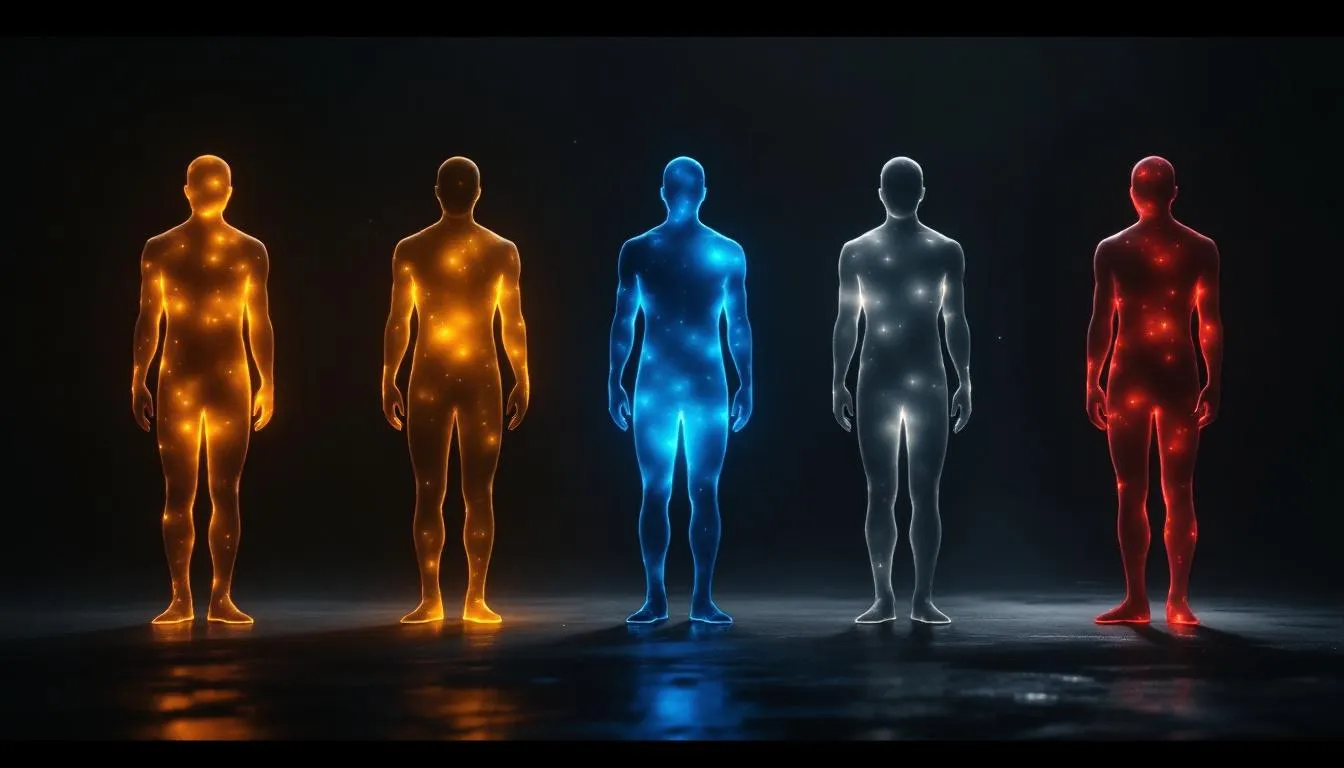
The characters in The Emotion Collector: Awakening grew from a single question: what kind of people would a society that outlawed feeling produce? I needed a protagonist who believed in the system before she broke it, an antagonist whose love was indistinguishable from control, and a supporting cast whose individual awakenings could show the reader that Emma's journey was not unique but part of something planetary in scope. Here is who they are and how they change.
Quick Answer: The central Emotion Collector characters are Emma Thorne, a government Collector who begins feeling the emotions she was trained to extract; Evan Cross, a resistance member immune to dampening technology; Marcus Webb, Emma's handler whose conditioning fails through proximity to her; Chancellor Mira Keller, Emma's mother and architect of the suppression system; and Dr. James Clarke, the scientist who discovers the link between emotion and planetary survival.
Definition: The character ensemble is built around a central transformation: each major figure represents a different relationship to emotional suppression, from enforcer to victim to architect to rebel.
Key Evidence: The defining character relationship is between Emma and Mira Keller, a mother-daughter bond that operates on both sides of the suppression divide and drives the novel's climax.
Context: I built every character around a version of the same choice: when you discover that the system you serve is destroying what it claims to protect, what do you do?
The two sections below cover Emma's arc in detail and the characters who shape her journey from obedient weapon to the catalyst for planetary restoration.
Emma Thorne: From the Council's Weapon to Humanity's Bridge
Emma Thorne is twenty-three when the book opens, the Council's most effective Collector, with amber eyes that shift color based on the emotions she absorbs and auburn hair pulled back in the approved style that eliminates personal expression. She has spent sixteen years extracting emotional energy from citizens and classifying it as waste, and she is good at her job, believes in her job. That belief is the first thing the book destroys.
Her awakening begins during a routine collection from a four-year-old boy named Tommy, whose love for his mother floods Emma's consciousness with a force her training never prepared her for. For three seconds, she experiences pure devotion: birthday mornings, bedtime stories, the security of small arms wrapped around a neck. When the collection device drains it away, she watches the child's face go blank. That moment is the fracture point. Emma does not rebel with a speech or a dramatic escape. She stands in a corridor and realizes she has been stealing pieces of human souls for her entire career.
I designed Emma's arc as a slow unfolding rather than a sudden conversion because I wanted the reader to feel the weight of what she was losing at each stage: her certainty, her identity, her sense of self. By the novel's end, she sacrifices individual consciousness entirely, dissolving into the planetary emotional field to guide humanity's mass awakening. She does not die but becomes something larger. But the woman named Emma Thorne, with her shifting amber eyes and her father's face in a memorial corridor, is gone. That cost was essential. A story about the value of feeling had to demand that its protagonist feel everything, including the loss of herself.
The Emotion Collector Characters Who Shape Emma's Journey
Evan Cross is the first person Emma meets who exists outside the rules of her world. Immune to dampening technology, he cannot be processed by her Collector abilities, and their failed encounter at a marketplace shatters her understanding of what is possible. Evan becomes her guide into the resistance, her introduction to the Emotion Gardens where crystallized feelings survive beyond Council reach, and eventually her love. In a world designed to eliminate connection, his ability to care openly is the most radical thing about him.
Marcus Webb is Emma's handler, assigned to monitor her and report anomalies. His conditioning fails not through dramatic revelation but through proximity: three years beside Emma gradually erodes the barrier between duty and care. When he chooses to protect her over reporting her awakening, the decision costs him everything he built his identity around. Marcus represents every person who has followed orders until the moment they could not.
Chancellor Mira Keller is the antagonist and the character I found hardest to write. She is Emma's mother, the architect of the suppression system, and a woman who genuinely believes emotion is too dangerous for humanity. What makes her more than a villain is the contradiction at her center: she built technology to eliminate feeling while preserving her daughter's emotional potential. When she kneels beside Emma's transforming body in the climax, weeping for the first time in decades, she is not redeemed. She is broken open by the love she spent her life trying to prove was dangerous.
Dr. James Clarke works from a hidden laboratory beneath the city, studying what the Council refuses to acknowledge: that human emotions function as biological connections to the planetary ecosystem. His discovery that the planet is dying of emotional starvation raises the stakes from personal liberation to species survival.
Viktor Brennan is a senior Council administrator who begins as a loyal enforcer and ends the book presenting evidence that the Council staged the Great Emotional War. His wife and son were killed in attacks he now knows his own government manufactured. I gave Viktor this role because the revelation had to come from inside the system. An outsider's accusation can be dismissed; an insider's proof cannot.
Why the Characters in The Emotion Collector: Awakening Matter
Each character in this novel faces the same question from a different position: is the safety of numbness worth the cost of never feeling fully alive? Their answers shape a story that is less about overthrowing a government than about individual people choosing, one by one, to feel again.
Conclusion
The Emotion Collector characters are built to show that awakening is not a single heroic act but a chain of personal choices, each one terrifying, each one necessary. Emma's transformation would mean nothing without Marcus choosing to protect her, without Viktor choosing to tell the truth, without Mira choosing to weep. If these characters stayed with you after the final page, you can follow what happens next in The Emotion Collector: Fracture Generation, coming Q4 2026. Learn more at theemotioncollector.com.